Free practice questions for the NTSA theory test
Sample questions on the NTSA theory test topics, with answers and explanations. No sign-up needed.
12 free questions. No account needed, and the answer comes after each one.
What the NTSA theory test covers
The NTSA theory test is multiple choice, on road rules, road signs and the Model Town Board. The rules (LN 28/2020) set at least 50 questions, and you pass with more than 70%, so 36 of 50. The samples below cover the same topics.
At a STOP sign you must:
NTSA questions and answers as a PDF
All 100 questions on this page and the 8 Model Town Board questions, each with the answer and the reason. Free, to keep on your phone or print.
88 more NTSA questions and answers, by topic
Real Kenyan road situations. Open a topic, pick your answer, then open it to see the right one and the reason.
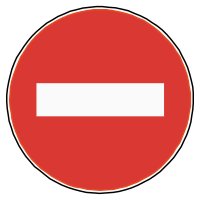
A No Entry sign stands at the end of a one-way street in town. The street looks empty, and a matatu has just driven in past the sign. What do you do?
- A. Go in slowly, keeping close to the edge
- B. Drive round to a route that allows entry
- C. Hoot at the entrance, then go in with care
Answer: B. Drive round to a route that allows entry. No Entry means no vehicle may go in, whatever other drivers do. Ignoring it is an offence with a KSh 3,000 fine, and you could meet traffic head-on.
On a murram road outside town you see a bend warning sign. You can see no vehicle, person or animal. What do you do?
- A. Slow down at the bend itself, once you can see what is round it
- B. Slow down before the bend, and keep to the middle of the road
- C. Slow down before the bend, while the road is still straight
Answer: C. Slow down before the bend, while the road is still straight. The sign warns of the bend itself, and of anything round it that you cannot see yet. Slow down on the straight before it: braking hard in the bend, above all on murram, can make you skid.
Barriers close the lane you use every day, and a worker waves traffic onto a side track. Your map still shows the old route. What do you follow?
- A. The signs, cones and workers, which show the road as it is today
- B. The map and your phone app, which show the whole road very clearly
- C. Your memory and your habit, which know this road very well
Answer: A. The signs, cones and workers, which show the road as it is today. Roadworks can change a road you know well. Slow down and follow the signs, cones and workers directing traffic there, not your map or your habit.
You are coming up to a busy roundabout in town. Why read the direction sign well before you reach it?
- A. To find out the safe speed for the roundabout in good time
- B. To pick your exit and your lane calmly before you enter
- C. To see which lane gets priority at the roundabout entry
Answer: B. To pick your exit and your lane calmly before you enter. The sign is a small map of the exits. Read it early and you can choose your lane without a sudden move, because you may not change lanes inside a roundabout.
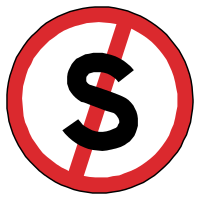
A No Stopping sign stands on a busy town road. You only need to let a friend get out, which takes a few seconds. What do you do?
- A. Check mirrors, signal left, then stop for a few seconds
- B. Stop at the kerb with your hazard lights flashing
- C. Drive on to a place where stopping is allowed
Answer: C. Drive on to a place where stopping is allowed. A No Stopping sign means you must not stop here at all, not even briefly. Letting someone off is still a stop, so drive on to a place where stopping is allowed.
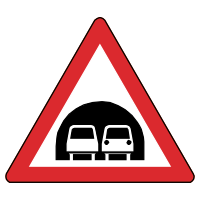
A warning sign shows a tunnel ahead. What do you do before you go in?
- A. Slow down and switch on your hazard lights
- B. Slow down and switch on your headlights
- C. Slow down and use your parking lights only
Answer: B. Slow down and switch on your headlights. A tunnel sign warns that a tunnel is ahead. Slow down and switch on your headlights before you go in.
You are following a lorry on a road outside town when you see a loose stones sign ahead. What do you do?
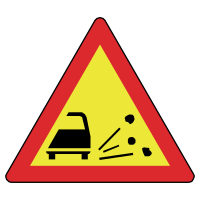
- A. Keep your speed and keep well back from the lorry ahead
- B. Slow down, and close up behind the lorry so it shields you
- C. Slow down and keep well back from the lorry ahead
Answer: C. Slow down and keep well back from the lorry ahead. A loose stones sign means there are loose stones on the road ahead, and tyres can throw them up. Slow down and keep well back from the vehicle in front.
A sign tells you that traffic coming towards you goes first, and a vehicle is approaching. What do you do?
- A. Slow down, let it pass, then go on when the way is clear
- B. Slow down, flash to make it wait, then go on when it is clear
- C. Slow down, hoot to warn it, then go on while it gives way to you
Answer: A. Slow down, let it pass, then go on when the way is clear. This sign means traffic coming towards you goes first. Slow down, let the oncoming vehicle pass, and go on only when the way ahead is clear.
You drive a lorry with a tall load. A height limit sign ahead shows a height lower than your load. What do you do?
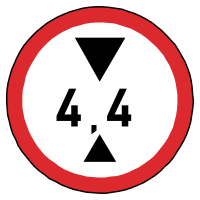
- A. Go under it slowly, keeping to the middle of the road
- B. Leave this road and use one your load can pass under
- C. Go under it if nothing is coming the other way
Answer: B. Leave this road and use one your load can pass under. A height limit sign means vehicles taller than the height shown may not go past it. If your vehicle or load is taller, use another road.
A sign warns that a bridge ahead is wide enough for only one vehicle at a time. A lorry coming the other way is already on it. What do you do?
- A. Go on slowly, keeping to your side of it
- B. Go on once the lorry is halfway across
- C. Wait until the lorry is off the bridge
Answer: C. Wait until the lorry is off the bridge. This sign warns of a bridge or other structure wide enough for only one vehicle at a time. Slow down, and if another vehicle is already on it, wait for it to clear.
A lane has a bus lane sign. The other lanes are slow and the bus lane is empty. You drive a car. May you use it?
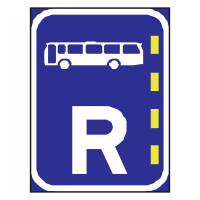
- A. No, that lane is for buses only, not cars
- B. Yes, but only outside the rush hours of the day
- C. No, except to pass a slow vehicle ahead
Answer: A. No, that lane is for buses only, not cars. A bus lane sign means the lane is for buses only. Do not drive in it unless you drive a bus.
You wait at a give-way line on a road into town. A matatu is coming on the road with priority. When may you move out?
- A. As soon as you have stopped fully and looked both ways
- B. When the matatu does not need to brake or swerve for you
- C. When it is far enough that it only needs to slow a little
Answer: B. When the matatu does not need to brake or swerve for you. Giving way means priority traffic is not forced to react to you. Slowing a little is still a reaction, and one stop does not give you the road.
On an old road the centre line is so faded that you cannot tell if it is continuous or broken. A slow lorry is ahead. What do you do?
- A. Stay behind it until you know overtaking is allowed and safe
- B. Treat it as broken, and pass when you can see far enough ahead
- C. Stay behind it until it slows down to let you pass
Answer: A. Stay behind it until you know overtaking is allowed and safe. If you cannot tell whether a centre line is continuous or broken, treat it as continuous. Overtake only where you know it is allowed and you can see far enough ahead to pass and get back to your side.
You are in a lane marked straight ahead only. Your turn is just ahead on the left and you notice it late. What do you do?
- A. Signal left, then turn when the left lane is clear
- B. Stop and signal until the next driver lets you across
- C. Carry straight on and plan another safe route
Answer: C. Carry straight on and plan another safe route. The arrow on your lane is an order, so from this lane you may only go straight on. Carry on and find another way back: a missed turn costs a few minutes, but a sudden move across a lane can cause a crash.
You follow a slow bus on a road with a broken centre line. When may you overtake?
- A. Only when the bus driver signals with his indicator that it is clear
- B. Only if you can see far enough ahead to pass and get back in time
- C. Only if the road ahead is clear for the next 100 metres
Answer: B. Only if you can see far enough ahead to pass and get back in time. A broken centre line means you may overtake, but only if you can see far enough ahead to pass and get back to your side before you meet oncoming traffic.
You see double yellow lines down the middle of a town road. A friend says they mean no parking. What do they mean?
- A. Centre lines: keep them on your right and do not cross to overtake
- B. Kerb lines: no parking, though you may stop to drop people
- C. Centre lines: you may cross them to overtake when the road is clear
Answer: A. Centre lines: keep them on your right and do not cross to overtake. Double yellow lines down the middle of the road are centre lines, not a parking rule. Like a single continuous centre line, keep them on your right and do not cross them to overtake.
Diagonal stripes (hatched markings) are painted on the road ahead. What should you do?
- A. Use them to pass a slow vehicle
- B. Stop on them if you stop briefly
- C. Do not drive through them
Answer: C. Do not drive through them. Hatched markings (diagonal stripes) separate traffic streams or protect turning lanes, and you should not drive through them.
At a junction with no signs or lights, a driver coming from your right looks at you and seems to wait. What do you do?
- A. Keep looking, and go only when you are sure it is safe
- B. Keep looking, and go as soon as you are sure he has seen you
- C. Keep looking, and go only when you are sure you arrived first
Answer: A. Keep looking, and go only when you are sure it is safe. Eye contact does not decide priority, and it does not show who else is coming. Arriving first does not give you the road either. Keep looking, and go only when it is safe.
Your light turns green, but traffic beyond the junction is stuck and there is no space past it. What do you do?
- A. Enter slowly, ready to move up when the queue does
- B. Enter only as far as the middle of the junction, then wait
- C. Wait until there is room for you on the far side
Answer: C. Wait until there is room for you on the far side. Green means go only when the road and the junction exit are clear. If you stop inside, you block the traffic crossing your path.
You reach a railway crossing in town. The lights are off and no train is in sight, but traffic is queuing beyond the crossing. What do you do?
- A. Wait until you are sure no train is coming, then go on
- B. Wait until there is room for you to clear the tracks
- C. Wait until the lights have been off for a minute, then go on
Answer: B. Wait until there is room for you to clear the tracks. You must be able to get all the way across. A queue can leave you stopped on the tracks, and no warning light does not mean no train.
An ambulance with its siren and flashing lights comes up behind you on a town road. What do you do?
- A. Slow down and keep going in your lane
- B. Move to the right and stop to let it pass
- C. Pull to the left and stop to let it pass
Answer: C. Pull to the left and stop to let it pass. Emergency vehicles with sirens and flashing lights have right of way. Pull to the left and stop to let them pass.
You wait to turn right at a junction, and a car is coming towards you. Who goes first?
- A. You, as you reached the junction before the other car
- B. The oncoming car, so wait for a safe gap to turn
- C. You, once you have signalled and checked behind
Answer: B. The oncoming car, so wait for a safe gap to turn. When turning, give way to oncoming traffic and to people already crossing the road you want to enter. So wait for a safe gap in the oncoming traffic before you turn right.
You reach a junction with no lights or signs a moment before a matatu reaches it from another road. Does arriving first give you the road?
- A. No, be ready to give way and go only when it is safe
- B. No, the matatu goes first as the larger vehicle
- C. Yes, if you have signalled before the matatu driver does
Answer: A. No, be ready to give way and go only when it is safe. At a junction with no lights or signs, no rule gives the road to traffic from one side, and arriving first does not give you the road. Be ready to give way, let a vehicle already in the junction clear it, and go only when you are sure it is safe.
You join a busy main road from a side street at a Give Way sign. What do you do?
- A. Slow down, stop only if you must, and go when it is safe
- B. Stop fully, and go only when the main road is empty
- C. Stop fully, then join when a main road driver slows for you
Answer: A. Slow down, stop only if you must, and go when it is safe. Traffic on the main road goes first. At a Give Way sign, slow down, stop if you must, and go only when it is safe.
You practised a route on the model town board, but the real roundabout in town has different lane arrows. How do you choose your lane?
- A. By the real signs only, read once at the entry
- B. By the real signs and lane arrows, read early
- C. By the lane the car ahead takes, at a safe distance
Answer: B. By the real signs and lane arrows, read early. On the road, the arrows on your lane decide where you may go, and you may not change lanes inside the roundabout. Read the real signs and markings early and pick your lane before you enter.
On the model town board you take a correct route to the place you were asked to reach. What else must you show?
- A. Where you hoot, flash and overtake along the way
- B. Where you change gear and use the clutch along the way
- C. Where you look, give way and signal along the way
Answer: C. Where you look, give way and signal along the way. Reaching the place is not enough. Show the rules all the way: at a Stop sign stop fully and look right, left and right again, give way where a sign tells you to, and signal before you turn.
You will turn right at a roundabout. Which lane do you use?
- A. The left lane, then move right on the roundabout
- B. The right lane, and stay in it until you exit
- C. The right lane, then move left before your exit
Answer: B. The right lane, and stay in it until you exit. To turn right or make a U-turn, use the right lane and stay in it. Never change lanes inside the roundabout; follow the lane arrows and markings.
At a roundabout, when do you signal left?
- A. As you enter, to tell waiting drivers you are joining
- B. Only if you can see a driver waiting to enter the roundabout
- C. Before your exit, to tell waiting drivers you are leaving
Answer: C. Before your exit, to tell waiting drivers you are leaving. Signal left before your exit, so drivers waiting to enter know you are leaving.
You reach a busy roundabout and traffic keeps coming from your right. A driver behind you hoots. What do you do?
- A. Wait for a safe gap in the traffic from your right
- B. Wait until the roundabout is completely empty of traffic
- C. Wait for a safe gap in the traffic from your left
Answer: A. Wait for a safe gap in the traffic from your right. Give way to traffic already in the roundabout, which comes from your right, and enter only when there is a safe gap. Never force your way in.
On the four-lane roundabout on the model town board, which lane can take you all the way round or turn you back the way you came?
- A. Lane 1, the outer lane
- B. Lane 2, second from outside
- C. Lane 3, second from inside
- D. Lane 4, the inner lane
Answer: D. Lane 4, the inner lane. Lanes are counted from the outside in. Only lane 4, the inner lane, can come back the way you came or go all the way round. It can also turn right or left.
You are in lane 1, the outer lane, at a four-lane roundabout on the model town board. Where can you go?
- A. Straight on only
- B. Straight on or right
- C. Straight on or left
Answer: C. Straight on or left. Lane 1 goes straight on or left. Lane 2 goes straight on only, lane 3 straight on or right, and only lane 4, the inner lane, can turn back or go all the way round.
On the model town board you are asked for the shortest correct route, and cutting through the parking zone would make the route shorter. What do you do?
- A. Take the safest route, even if it is a little longer
- B. Take the shortest correct route, without using the parking zone
- C. Take the route with the fewest turns, avoiding the parking zone
Answer: B. Take the shortest correct route, without using the parking zone. Take the shortest correct route, and do not cut through the parking zone. The parking zone is used as a way through only as a last choice, when there is no other route.
On the model town board you must use the flush (parallel) parking along the left side of the road. How do you park?
- A. Start at the far end, reverse in, leave room, and drive out forwards
- B. Start at the near end, reverse in, leave room, and drive out forwards
- C. Start at the far end, drive in nose first, and reverse out
Answer: A. Start at the far end, reverse in, leave room, and drive out forwards. Flush parking is the open zone on the left side of the road. Start at the far end, reverse in, leave space to get out, and drive out forwards.
On a one-way road on the model town board a broken white line separates two lanes. When may you change lanes or overtake?
- A. Only where the white line is continuous and no vehicle is near
- B. Only to change lanes, not to overtake, and only when clear
- C. Only when the road is clear and it is safe to do so
Answer: C. Only when the road is clear and it is safe to do so. A broken white line means you may change lanes or overtake, but only when the road is clear and safe. A continuous white line means stay in your lane.
A sign shows the limit on a road into town, but the road is wet and people are crossing. What is the right speed?
- A. Slower than the limit, to suit the road and the people
- B. Just under the limit, to keep up with the other traffic
- C. At the limit, to stay on the right side of the law
Answer: A. Slower than the limit, to suit the road and the people. The limit is the most you may go, not a target. Rain and people crossing can need far less.
A hillside hides the bend ahead. Why slow down before you enter it?
- A. So you can stop within the distance of your headlights
- B. So you can stop within the distance you can see
- C. So you can stop within the distance the sign gives
Answer: B. So you can stop within the distance you can see. You must be able to stop within the distance you can see to be clear, and you cannot see round the bend. Headlights do not light the road round it, and a warning sign shows a hazard, not a stopping distance.
You are tired after a long drive and a boda boda cuts across ahead. Which part of your stopping gets longer because you are tired?
- A. Thinking distance, since a tired driver reacts later than usual
- B. Thinking and braking distance, since you react and brake worse then
- C. Braking distance, since a tired driver brakes less firmly
Answer: A. Thinking distance, since a tired driver reacts later than usual. Thinking distance is how far you travel before your foot reaches the brake, and tiredness makes it longer. Braking distance comes from speed, tyres, brakes and road.
You are late with a delivery and the customer keeps calling. What do you change?
- A. Your speed, to win back the time you have lost
- B. Your checks, by doing them faster than usual today
- C. Your arrival time, which you give once you stop
Answer: C. Your arrival time, which you give once you stop. Being late does not make the road any safer, so do not speed up or skip checks. Stop somewhere safe and tell the customer the new time: using a mobile phone while the vehicle is moving is an offence.
A matatu is on an empty dual carriageway highway. What is the most it may travel at?
- A. 110 km/h
- B. 100 km/h
- C. 50 km/h
- D. 80 km/h
Answer: D. 80 km/h. Matatus, buses and commercial vehicles such as lorries are limited to 80 km/h on every road, including highways. Taxis follow the limits for cars.
You drive a car on a single carriageway highway, and no sign shows a lower limit. What is the most you may travel at?
- A. 100 km/h
- B. 110 km/h
- C. 80 km/h
Answer: A. 100 km/h. For cars, the limit is 100 km/h on a single carriageway highway and 110 km/h on a dual carriageway, unless a sign shows a lower limit.
You tow a trailer with your car on a highway. What is the most you may travel at?
- A. 80 km/h
- B. 65 km/h
- C. 100 km/h
Answer: B. 65 km/h. A vehicle towing a trailer is limited to 65 km/h, so the car limits of 100 and 110 km/h on highways do not apply while you tow.
You wait to turn at a junction in town while an elderly man crosses slowly in front of you. What do you do?
- A. Wait until he has finished crossing, then move
- B. Wait until he has crossed half the road, then move
- C. Wait until he is past the front of your car, then move
Answer: A. Wait until he has finished crossing, then move. When you turn, people already crossing the road you are turning into go first. An older person may be slow, so wait until he has finished crossing and do not hurry him with the horn.
A bus stops ahead of you on a town road and people get off. You cannot see the road in front of it. What do you do?
- A. Slow down and be ready to hoot at anyone stepping out
- B. Slow down and be ready to stop for anyone stepping out
- C. Slow down and be ready to steer round anyone stepping out
Answer: B. Slow down and be ready to stop for anyone stepping out. People often cross just after getting off, and the bus hides them until they step out. Seeing no one does not mean no one is there, and hooting does not clear the way.
A vehicle ahead of you has stopped at a zebra crossing. You cannot see anyone crossing. What do you do?
- A. Pass it slowly after checking your side is clear
- B. Flash your lights to ask the driver to move on
- C. Stop behind it and wait until it moves off
Answer: C. Stop behind it and wait until it moves off. Never overtake a vehicle that has stopped at a pedestrian crossing, as the driver may have stopped for someone you cannot see. At a zebra crossing, give way to anyone crossing.
You must walk along a road that has no footpath. Which way should you walk?
- A. With the traffic behind you, close to the edge
- B. Facing the oncoming traffic, close to the edge
- C. On whichever side of the road has less traffic
Answer: B. Facing the oncoming traffic, close to the edge. Where there is no footpath, walk facing oncoming traffic so you can see approaching vehicles. Never assume a driver has seen you.
Your brother walks home along a dark road at night. What should he wear?
- A. Bright or reflective clothing that drivers can see
- B. Dark clothing, since he walks facing the traffic
- C. Ordinary clothes, since drivers use their headlights
Answer: A. Bright or reflective clothing that drivers can see. At night, pedestrians should wear bright or reflective clothing so that drivers can see them. Never assume a driver has seen you.
You steer round a pothole and keep your eyes on it until you are past. What can go wrong?
- A. Little, since the pothole is the biggest danger ahead
- B. Nothing, as long as you checked your mirrors first
- C. You may miss people or vehicles farther ahead
Answer: C. You may miss people or vehicles farther ahead. Staring at one danger makes you miss what is developing farther ahead. Keep your eyes moving while you plan how to pass it.
You check your mirrors and the lane looks clear. You move over and a boda boda is right beside you. What did you miss?
- A. The rider's speed, which only a look in the mirror really shows
- B. The blind spot, which only a look over your shoulder shows
- C. Your own signal, which only a look at the indicator shows
Answer: B. The blind spot, which only a look over your shoulder shows. A blind spot is an area your mirrors do not show, and a boda is small enough to sit in it. Look over your shoulder before you move over.
At a junction a driver in the near lane waves you across. You cannot see the second lane past his vehicle. What do you do?
- A. Go, since he can see the second lane from his seat
- B. Go, after checking your mirrors and signalling
- C. Wait until you can see the other lane yourself
Answer: C. Wait until you can see the other lane yourself. A wave does not tell you about a lane you cannot see. Look in every direction yourself, and wait for a better view if you need it.
You are about to pull out from the roadside. You checked the lane beside you and it was clear. You signal, and a cyclist rides into the gap. What should guide you now?
- A. The gap as it is now, so look again before you move
- B. The lane as you first checked it, so move off as planned
- C. The cyclist, so let him pass and move off straight after
Answer: A. The gap as it is now, so look again before you move. Things change after your first look. A signal does not make others give way, so check again before and as you move.
You want to turn left at a junction in town, but there is a side road just before it. When do you signal?
- A. In good time, but after you pass the side road
- B. As early as possible, even before the side road
- C. At the corner itself, as you begin to turn in
Answer: A. In good time, but after you pass the side road. A signal must show the move you really intend. Too early can look like a turn at the side road, and too late leaves drivers behind no time to react.
A car ahead has its left indicator on, but it is drifting right and not slowing. What do you do?
- A. Trust the indicator, but slow down in case it turns
- B. Go by its speed and position, and keep your gap
- C. Keep your gap, and pass on its right since it is turning left
Answer: B. Go by its speed and position, and keep your gap. People signal wrongly or forget to cancel. Watch what the vehicle actually does, not only its indicator.
You glance at a woman waiting to cross, but your mind is on a message on your phone. What is the risk?
- A. She may not see you, since you are on the phone
- B. None, since a quick glance at her is enough
- C. You may look at her and still not notice her
Answer: C. You may look at her and still not notice her. Looking at someone does not mean you noticed them. Your attention cannot be in two places, so keep the phone away while you drive.
A matatu cuts in front of you and the driver shouts at you. You are angry. What do you do?
- A. Pull over safely ahead of it and calmly talk to the driver
- B. Stay calm, and flash your lights once so he knows he was wrong
- C. Leave more space and calm down, stopping safely if needed
Answer: C. Leave more space and calm down, stopping safely if needed. Getting back at someone adds a new danger instead of solving the first. Leave space, and stop somewhere safe if you need time to calm down.
You feel sleepy at night on the Nairobi to Nakuru road. What do you do?
- A. Slow down and drive on safely to the next town
- B. Stop at a safe place and rest before you go on
- C. Turn the radio on and drive on safely at a lower speed
Answer: B. Stop at a safe place and rest before you go on. Music, cold air and energy drinks do not take tiredness away. A tired driver is slow to notice danger, so stop at a safe place and rest.
You pick up a new medicine from the chemist and plan to drive. What is the sensible step?
- A. Read the label, and ask the pharmacist if you are unsure
- B. Ask friends who took it if it made them sleepy, then decide
- C. Look the medicine up online, and trust the first result you find
Answer: A. Read the label, and ask the pharmacist if you are unsure. Some medicines make you drowsy, and you should not drive after taking one of those. Read the label, and ask the pharmacist or a doctor if you are unsure.
You are late and tempted to skip your walk-round check before a trip. What do you do?
- A. Do the quick check, limited to the lights and tyres
- B. Do the quick check, in the order that suits you that day
- C. Do the quick check, in the same order every time
Answer: C. Do the quick check, in the same order every time. A quick walk-round before every trip finds faults such as a damaged tyre or a light that does not work. Doing it in the same order each time means you miss less when you are in a hurry, and yesterday's check does not cover today.
Your car drives normally and the engine sounds fine, but the brake pedal feels wrong when you press it gently. What do you do?
- A. Have a qualified person check the brakes before you go on
- B. Have a friend who drives well check the brakes before you go on
- C. Have the brakes checked at the next garage you pass on the way
Answer: A. Have a qualified person check the brakes before you go on. An engine that runs well tells you nothing about the brakes. A brake pedal that feels wrong needs checking by a qualified person, and weak brakes must never be tested at speed. By law, a vehicle must be kept so that driving it is not likely to be a danger.
On the road to Nakuru, a red warning light lights up on the dashboard. You do not know its symbol. What do you do?
- A. Pull over safely, switch off and restart to see if it clears
- B. Pull over safely, switch off and check the manual
- C. Pull over safely, let the engine cool, then drive on slowly
Answer: B. Pull over safely, switch off and check the manual. You do not know what this light means, and a red light can mean a serious fault such as low oil pressure or a brake problem. Stop as soon as it is safe, and look the symbol up in the owner's manual.
You find a fresh wet patch under your car and you do not know what is leaking. What do you do before you drive?
- A. Find out what is leaking, with trained help if needed
- B. Find out what is leaking by its smell, and drive on carefully
- C. Find out how fast it leaks, and drive on if it is slow
Answer: A. Find out what is leaking, with trained help if needed. An unknown leak can be a safety fault, such as brake fluid or fuel. Find the cause before you drive. A guess is not enough.
A child's seat belt clicks shut, but the strap lies across her neck and stomach. The trip is short. What do you do?
- A. Make the belt fit her properly, by pulling it tight
- B. Make the belt fit her properly, by moving it behind her back
- C. Make the belt fit her properly, with a booster seat
Answer: C. Make the belt fit her properly, with a booster seat. A click does not prove the belt fits. A booster seat helps a belt fit a child properly, and belts are needed on every trip however short.
Where should the fire extinguisher be kept in your car?
- A. Within your reach, loose in the pocket of the door
- B. Within your reach, and fixed in place so it cannot roll
- C. In the boot, fixed with straps in place so it cannot roll
Answer: B. Within your reach, and fixed in place so it cannot roll. An extinguisher helps only if you can get to it fast, so keep it within reach. Fix it in place, so it cannot roll under the pedals or fly forward in a hard stop.
A parking sign has a small plate under it that names one type of vehicle. You drive a different type. What do you check?
- A. Whether the rule on the sign covers your type of vehicle
- B. Whether your stay is shorter than any time limit shown there
- C. Whether other types of vehicle are parked there too
Answer: A. Whether the rule on the sign covers your type of vehicle. A plate under a sign limits its rule, for example to one class of vehicle, a time or a stretch of road. Read it to see whether the rule covers you. Finding space to park is not permission.
A helper guides you as you reverse. His hand signals stop making sense to you. What do you do?
- A. Keep reversing slowly and watch your mirrors
- B. Carry on as the last signal you understood told you
- C. Stop and sort out the signals before you move again
Answer: C. Stop and sort out the signals before you move again. A guide helps only while the signals are clear and you can see him. If either goes, stop.
You back a lorry into a bay in a market yard and the reversing alarm is working. What else do you do?
- A. Check the path and look for people before you start reversing
- B. Check the path and keep looking for people around the lorry
- C. Check the path and rely on the camera for people behind
Answer: B. Check the path and keep looking for people around the lorry. An alarm warns people but does not prove the path is clear. Look all round, and stop if you lose sight of a person.
You load your car with goods until the boot only just shuts. Everything fits. How does the car now stop and steer?
- A. It needs more room to stop and is slower to steer
- B. It stops in the same space, but is slower to steer
- C. Better, as the extra weight presses it onto the road
Answer: A. It needs more room to stop and is slower to steer. Weight and balance change how a car handles. A load that fits can still make your braking distance longer.
You turn a long lorry left at a tight corner in town. What must you remember about the back of the lorry?
- A. Its back wheels follow the same path as the front wheels
- B. Its back wheels cut inside the path of the front wheels
- C. Its back wheels swing out wide of the front wheels
Answer: B. Its back wheels cut inside the path of the front wheels. On a turn, the back wheels of a long vehicle cut inside the path of the front wheels, so the back can hit the kerb, a pole or someone standing at the corner. Watch your left mirror all the way round the turn.
A matatu ahead slows beside a stop where people stand waiting. What do you do?
- A. Brake firmly and stop behind it while you still have time
- B. Ease off and hoot to clear the stop while you still have time
- C. Ease off and open a gap while you still have time
Answer: C. Ease off and open a gap while you still have time. A matatu often stops without warning to pick up or drop off passengers, and people may cross around it. Ease off early and leave more room, so you are not forced into a sudden move.
What does the law require of the speed governor in a matatu?
- A. It must stop the matatu going over 80 km/h, with its certificate on show
- B. It must stop the matatu going over 100 km/h, with a sticker on its windscreen
- C. It only has to sound a buzzer above 80 km/h, with a certificate on show
Answer: A. It must stop the matatu going over 80 km/h, with its certificate on show. A matatu needs a speed governor that stops it going over 80 km/h, with the governor certificate on show.
A matatu driver says one beer is within the drink-drive limit. How much alcohol may a PSV driver have?
- A. 0.35 mg per litre of breath, as for other drivers
- B. Half the limit of other drivers, for any PSV driver
- C. None at all, for any PSV driver on the road
Answer: C. None at all, for any PSV driver on the road. The limit for most drivers is 0.35 mg of alcohol per litre of breath, but drivers of PSVs, commercial vehicles and school transport must have none at all.
All the seats in a matatu are taken, and more people want to board at a stop. What is the rule?
- A. No more passengers than the seats declared by the owner
- B. No more passengers than the seats set at its inspection
- C. No more than the seats, plus standing passengers on short trips
Answer: B. No more passengers than the seats set at its inspection. A matatu may not carry more passengers than the seats set at its inspection. A passenger in a seat with a belt must wear it.
You are a learner and want to practise a hard move, such as reversing into a tight space. Where should you start?
- A. On a quiet road in daylight, with your driving instructor
- B. In a safe training area, with a friend who holds a licence
- C. In a safe training area, with your driving instructor
Answer: C. In a safe training area, with your driving instructor. On a provisional licence your driving instructor must be with you, so a friend is not enough. Start in a safe training area, away from traffic, until you have the skill.
You hold a B2 licence for ordinary cars. A friend asks you to drive his car as a taxi, for pay. It looks just like your own car. What do you check?
- A. Whether your licence covers taxis, which are Class B3
- B. Whether your licence covers taxis, which are Class B1
- C. Whether your licence covers taxis, which are Class D
Answer: A. Whether your licence covers taxis, which are Class B3. What a vehicle is used for can change the licence you need, not only its size or looks. Within Class B, B3 is the class for taxis.
How long is a provisional driving licence (PDL) valid?
- A. Six months, renewable for further periods of six months each
- B. Three months, renewable for further periods of three months
- C. Three months, renewable once for a further three months
Answer: B. Three months, renewable for further periods of three months. A provisional driving licence is valid for three months, but it can be renewed for further periods of three months.
You are learning on a provisional licence. Where must your L-plates be shown?
- A. Front and rear, where they can be seen from at least 10 metres
- B. Front and rear, where they can be seen from at least 50 metres
- C. Front and rear, where they can be seen from at least 20 metres
Answer: C. Front and rear, where they can be seen from at least 20 metres. While you learn, L-plates must be shown at the front and the back of the vehicle, where they can be seen from at least 20 metres.
Which licence class lets you drive a matatu or a bus?
- A. Class B2
- B. Class C
- C. Class A
- D. Class D
Answer: D. Class D. Class D is for public service vehicles such as matatus and buses. Class C is for trucks and goods vehicles, and Class A is for motorcycles and three-wheelers.
You have finished your driving lessons and passed your driving test. What do you apply for next, and how long is it valid?
- A. An interim licence, which is valid for 6 months
- B. An interim licence, which is valid for 3 months
- C. A second provisional licence, valid for 6 months
Answer: A. An interim licence, which is valid for 6 months. Learners who have finished their lessons and passed the driving test get an interim licence, valid for 6 months, and then their full licence.
Your driving school says that breaking any part of the Highway Code is a crime. What is true?
- A. Only the parts about speed and drink are crimes
- B. It is not a crime by itself, but a court can use it
- C. It is only advice, and a court cannot use it as evidence
Answer: B. It is not a crime by itself, but a court can use it. Offences are set out in laws such as the Traffic Act and its rules. The Highway Code is laid before Parliament; failing to follow it is not a crime by itself, but a court can use it as evidence in a case.
Your motorbike is insured. You now start delivering food for an app. What do you ask your insurer?
- A. Whether your policy covers delivery work for pay
- B. Whether the app sign-up covers delivery work for you
- C. Whether the policy covers a pillion rider on deliveries
Answer: A. Whether your policy covers delivery work for pay. Cover must match how you use the vehicle. An app sign-up does not replace insurance, and a policy that exists may still leave the work out.
A friend forwards an undated screenshot saying a fine has changed, with a number to send the payment to. What do you do?
- A. Call the number on it to confirm the official way to pay
- B. Check the current rule and the official way to pay
- C. Ask the sender for the official rule, then pay if it matches
Answer: B. Check the current rule and the official way to pay. Fines for minor traffic offences are set in law, in the Traffic (Minor Offences) Rules, 2016, and run from KSh 500 to KSh 10,000. A forwarded screenshot proves nothing, so check the rule and the official way to pay before you send money.
You take a call on your phone, held in your hand, while driving slowly in traffic. What is true?
- A. Allowed in slow traffic, but an offence on the open road with a KSh 500 fine
- B. An offence only on a highway, with a KSh 2,000 fine, unless you are parked
- C. An offence with a KSh 2,000 fine, unless permanently fixed to the vehicle
Answer: C. An offence with a KSh 2,000 fine, unless permanently fixed to the vehicle. Using a mobile phone while the vehicle is moving is an offence with a KSh 2,000 fine, unless the equipment is permanently fixed to the vehicle. Pull over safely to take a call.
What is the fine for not wearing a seat belt while the vehicle is moving?
- A. KSh 2,000
- B. KSh 500
- C. KSh 1,000
Answer: B. KSh 500. Not wearing a seat belt while the vehicle is moving carries a KSh 500 fine.
You leave your car on the road, where it gets in the way of other traffic, while you run into a shop. What fine can you face?
- A. KSh 5,000
- B. KSh 1,000
- C. KSh 3,000
- D. KSh 10,000
Answer: D. KSh 10,000. Leaving a vehicle on the road where it blocks or gets in the way of other traffic carries a KSh 10,000 fine.
You left your driving licence at home and a police officer asks to see it. What is the position?
- A. Not an offence, as long as your licence is valid and current
- B. An offence, with a KSh 500 fine for not carrying it or not showing it
- C. An offence, with a KSh 1,000 fine for not carrying or showing it
Answer: C. An offence, with a KSh 1,000 fine for not carrying or showing it. Carrying your driving licence, and showing it when asked, is a legal duty. Not carrying it, or not showing it when asked, carries a KSh 1,000 fine.
By law, when does night start and end for your lights?
- A. 6.45 pm to 6.15 am
- B. 6.15 pm to 6.45 am
- C. 7.15 pm to 5.45 am
Answer: A. 6.45 pm to 6.15 am. By law, night runs from 6.45 pm to 6.15 am, and your lights must be on. Use them in fog or heavy rain too.
The bright lights of an oncoming vehicle dazzle you at night. What do you do?
- A. Slow down and look towards the right edge of the road
- B. Slow down and look towards the left edge of the road
- C. Slow down and look along the centre line of the road
Answer: B. Slow down and look towards the left edge of the road. If you are dazzled, slow down and look towards the left edge of the road rather than at the oncoming lights.
You are first at the scene of a crash and people are hurt. What do you do first?
- A. Hazard lights on, two red triangles at least 50 m ahead and behind
- B. Call 999 or 112 at once, then put out your two red triangles
- C. Hazard lights on, and one red triangle at least 50 metres behind you
Answer: A. Hazard lights on, two red triangles at least 50 m ahead and behind. Protect the scene first, then call 999 or 112, then help the injured. Rushing to a casualty on a live carriageway can cause a second crash.
A motorcyclist lies hurt beside the road. He is breathing normally and still has his helmet on. What do you do about the helmet?
- A. Take it off with a helper unless he has a neck injury
- B. Take it off gently so he can breathe more easily
- C. Leave it on unless it is essential to take it off
Answer: C. Leave it on unless it is essential to take it off. Do not remove a motorcyclist's helmet unless it is essential, for example if they cannot breathe. Only move an injured person if there is immediate danger such as fire.
1. At a STOP sign you must:
- A. Slow down, look right-left-right, and go if clear
- B. Stop only if other vehicles are in sight, then go
- C. Stop fully, look left-right-left, and go on only if clear
- D. Stop fully, look right-left-right, and go only if clear
Answer: D. Stop fully, look right-left-right, and go only if clear. STOP is mandatory. Make a full stop, look right-left-right, and proceed only when the road is clear (NTSA Handbook, Unit 3).
2. A red circle with a white horizontal bar (No Entry) means:
- A. No overtaking in this whole section
- B. No U-turn at this next junction
- C. Do not enter, entry is forbidden
- D. End of the restricted zone here
Answer: C. Do not enter, entry is forbidden. A No Entry sign is absolute. Entering against it is illegal and dangerous, because you would be facing oncoming traffic.
3. A triangular warning sign showing two children means:
- A. School or children crossing ahead: take great care
- B. Children's playground by the road ahead: take great care
- C. Cycle lane ahead: take great care of children on bicycles
- D. Bus stop ahead: take great care of children getting on
Answer: A. School or children crossing ahead: take great care. School zones demand the highest care. Slow down, be ready to stop, and never overtake at the crossing.
4. A red-bordered triangle showing a train warns of:
- A. A pedestrian crossing ahead
- B. A railway station or stop ahead
- C. An animal crossing ahead
- D. A railway level crossing ahead
Answer: D. A railway level crossing ahead. A railway crossing is ahead. A train in the triangle means a crossing with no barrier; a gate means one with a barrier. Give way to any train, stop if the red lights flash or the barrier is down, and never try to beat a train.
5. A blue rectangular sign showing a white letter "P" indicates:
- A. No parking allowed here
- B. Parking area available
- C. Pedestrian zone ahead
- D. Police station ahead
Answer: B. Parking area available. A blue "P" marks a parking area. The No Parking version is a red circle with a slash over the "P".
6. A continuous yellow line along the edge of the road, at the kerb, means:
- A. No stopping, except to let people on or off or to load
- B. No parking, except after 6 pm or to let people on or off
- C. No waiting, except to let people on or off or for a few minutes
- D. No stopping, except to let people on or off, not to load
Answer: A. No stopping, except to let people on or off or to load. A yellow kerb line means no stopping, except while traffic makes you stop, to let someone get on or off, or to load or unload goods. So you may not park or wait there.
7. A continuous yellow line down the centre of a two-way road means:
- A. Cross it to overtake only when it is safe
- B. Do not stop on the road at any time
- C. Stay on your side of it: no overtaking
- D. Keep to the middle of the road here
Answer: C. Stay on your side of it: no overtaking. A continuous yellow centre line means NO overtaking. Crossing it risks a head-on collision.
8. At an uncontrolled roundabout, who has the right of way?
- A. The vehicle already on it, coming in from your left
- B. The vehicle that got to the roundabout first
- C. The bigger vehicle, such as a bus or lorry
- D. The vehicle already on it, coming from your right
Answer: D. The vehicle already on it, coming from your right. Give way to traffic already on the roundabout. In Kenya that traffic comes from your right.
9. The traffic light is green, but a police officer signals you to stop. You must:
- A. Obey the lights, whose signal overrides the officer's
- B. Obey the officer, whose signal overrides the lights
- C. Obey the signal given first, which overrides the later one
- D. Stop briefly, then follow the green if the road is clear
Answer: B. Obey the officer, whose signal overrides the lights. A police officer's instructions always override signal lights.
10. What is the maximum speed limit for a saloon car in a town?
- A. 30 km/h
- B. 50 km/h
- C. 60 km/h
- D. 80 km/h
Answer: B. 50 km/h. 50 km/h is the maximum in built-up areas. Go slower if signs say so or conditions need it.
11. In adverse weather (rain or fog), the safe following distance is:
- A. 2 seconds (the 2-second rule)
- B. 3 seconds (the 3-second rule)
- C. 4 seconds (the 4-second rule)
- D. One car length for every 10 km/h
Answer: C. 4 seconds (the 4-second rule). Leave at least 4 seconds in rain or fog, more than the 3-second minimum on a dry road. Count from when the vehicle ahead passes a fixed point.
12. Someone is badly hurt in a crash. Which number can you call for help, free?
- A. 999 or 112
- B. 10111 or 10177
- C. 000 or 106
- D. 17 or 18
Answer: A. 999 or 112. 999 and 112 are free emergency numbers on every network. The Kenya Red Cross is on 1199, also free.
Take the full timed mock exam
50 questions with a timer, marked the way NTSA marks: more than 70% to pass, which is 36 of 50.